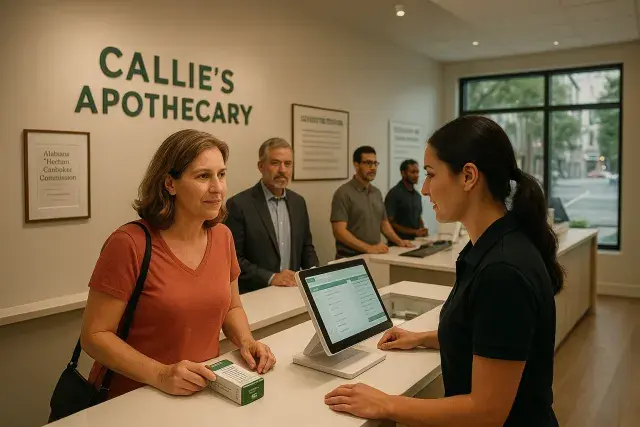
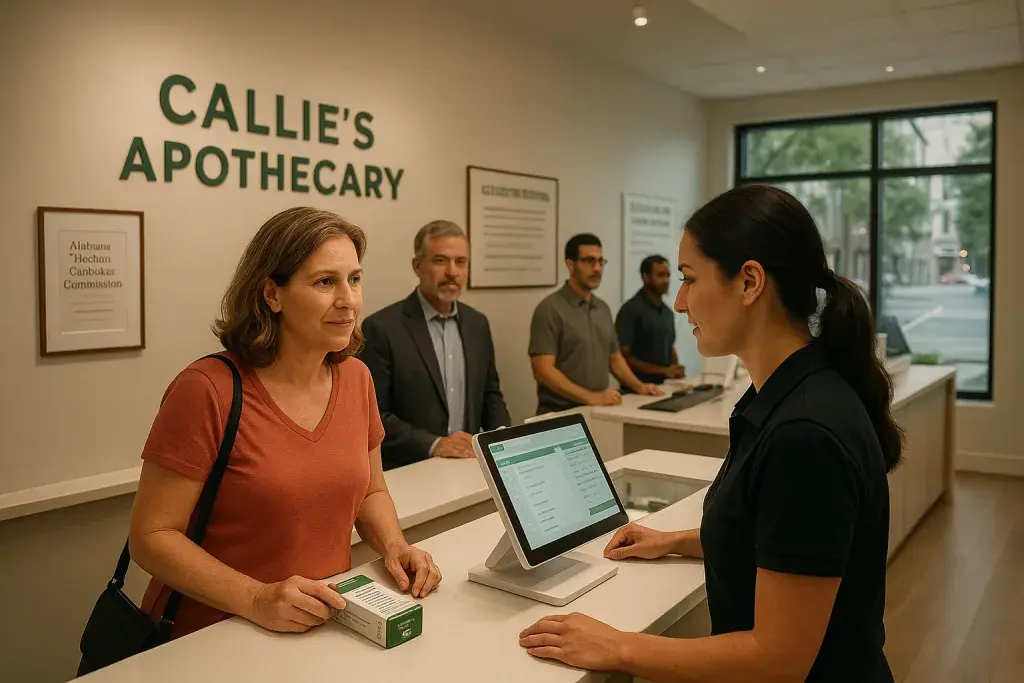
Alabama dispensaries opened for business this week - for real, for the first time. Callie's Apothecary in Montgomery held a soft opening Wednesday and began serving patients Thursday morning, marking the end of a years-long effort to get a functional medical cannabis program off the ground in a state that passed its enabling legislation more than five years ago. For operators watching from other states, the story here isn't just symbolic. It's a case study in what happens when a regulatory framework stalls out between law and implementation.
The Alabama Medical Cannabis Commission spent years working through legal disputes and licensing challenges before issuing dispensary licenses to three companies last December. That timeline - from bill signing to first legal sale - stretched well past what most state programs experience, and it created real pressure on the business side. Operators who had invested in infrastructure, compliance systems, and staff were sitting on licensed intent without a functioning market. In mature programs elsewhere, operators rely on tools like a cannabis dispensary pos system new york to manage compliant inventory, patient records, and seed-to-sale tracking from day one - the expectation being that technology readiness precedes opening. Alabama's drawn-out path tested that preparation in ways most operators don't anticipate when they model a launch.
With roughly 70 certified physicians currently authorized to recommend medical cannabis to patients, the physician network is thin at the moment. John McMillan, director of the Alabama Medical Cannabis Commission, acknowledged as much, noting that many physicians held off on certifying until they could confirm that patients who received a recommendation could actually obtain product. That's a logical bottleneck - and one that other states have seen before. The physician pipeline tends to expand once product access is confirmed and the program demonstrates operational stability. For dispensary operators, though, a small physician network means constrained patient volume in the near term, which matters directly for revenue modeling, inventory purchasing decisions, and wholesale ordering cycles.
What Operators Are Walking Into
Alabama's medical cannabis program is structured around a licensed dispensary model, not a vertically integrated free-for-all. That has compliance implications for every party in the supply chain. Dispensaries must maintain rigorous intake and sales documentation - patient registry verification, product batch tracking, compliant packaging confirmation, and point-of-sale records that satisfy state reporting requirements. This isn't optional overhead; it's the operational baseline for a licensed cannabis business in any regulated state program. Getting those workflows right in the first weeks of operation matters, because early compliance habits tend to calcify into ongoing practice, for better or worse.
Inventory management at the SKU level is another early pressure point. Medical programs often carry a narrower product menu than adult-use markets - typically focused on specific formulations and delivery methods approved under the state's medical framework. Alabama's approved product categories are defined by the commission's licensing structure. Operators can't just drop in every format available elsewhere. That constrains the budroom inventory mix and requires careful coordination with licensed producers on what's actually moving through the supply chain at any given time.
The Patient Access Picture
The program's first patient, Amanda Taylor, drove two hours from Cullman to Montgomery to make her purchase. She described herself as a medical refugee - someone who relocated to another state with legal access to medical cannabis and returned to Alabama after the law passed. Her story is not unique to Alabama. Across several states with slow-moving or litigated medical programs, patients have faced extended gaps between legal authorization and actual access. That human dimension doesn't show up on a compliance checklist, but it shapes the political and regulatory environment that operators work inside. When patients are vocal about access gaps, it tends to accelerate physician certification and can drive commission action on license issuance timelines.
What's striking here is the expectation gap between when a law passes and when a product actually reaches a patient. Alabama's five-year lag is an extreme case, but the structural forces behind it - legal challenges to the licensing process, deliberate regulatory caution, a limited initial physician pool - are not unusual. Operators entering new or emerging state markets should read Alabama as a reminder that licensing approval and operational launch are two different things, sometimes separated by years and significant carrying costs.
The Road Ahead for a New Market
Three licensed dispensaries is a bare-bones start for a state the size of Alabama. The commission has signaled the program is operational and growing, not finished. As the physician network expands and patient registrations increase, pressure on dispensary capacity, inventory sourcing, and compliance infrastructure will grow alongside it. Operators running lean in the early months may need to scale faster than their initial projections assumed. That means staffing, POS capacity, wholesale procurement relationships, and reporting systems all need to be built with growth assumptions baked in - not retrofitted after demand arrives.
For the broader B2B cannabis industry - technology vendors, packaging suppliers, compliance consultants, payment processors - Alabama represents a new client base coming online. Small program, yes. But every regulated market starts somewhere, and the operational needs of a newly licensed dispensary in Montgomery are substantively the same as those of a mature operator in a larger market: compliant systems, reliable supply, and the capacity to document every transaction to regulatory standard. The first sale happened. The work is just beginning.