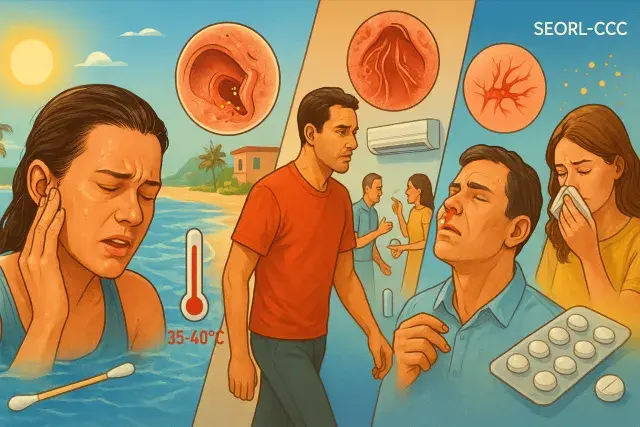
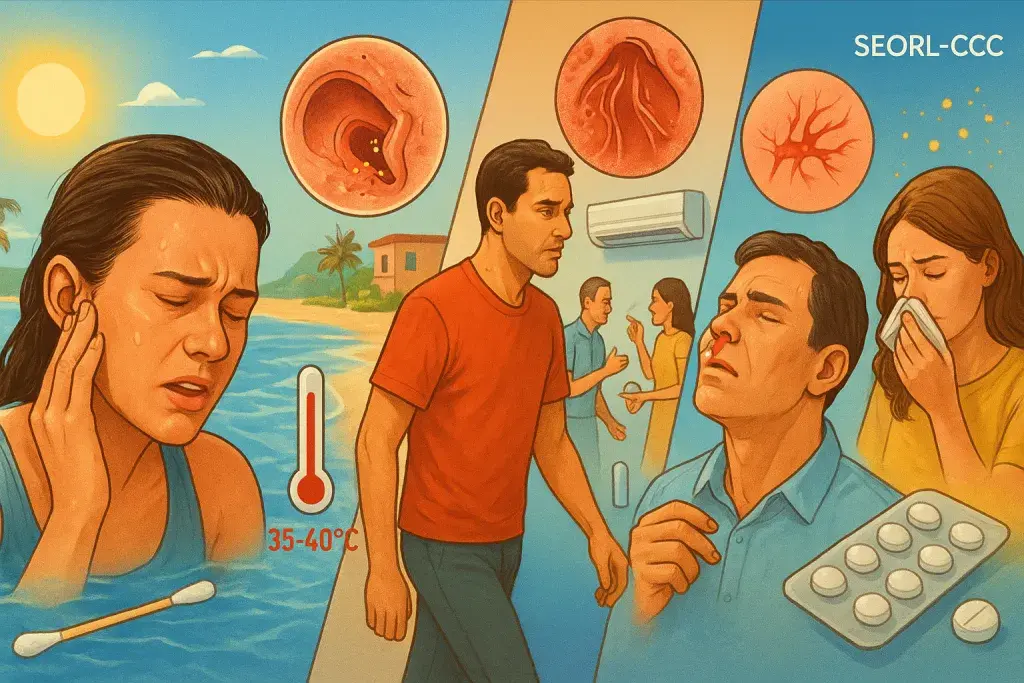
Summer doesn't just change behavior - it changes physiology. The Spanish Society of Otolaryngology and Head and Neck Surgery (SEORL-CCC) has issued a formal advisory warning that warm-weather routines expose the general population to conditions that can disrupt the natural balance of the ears, nose, and throat. According to the society's president, Dr. Serafín Sánchez, the most common seasonal presentations include swimmer's ear, pharyngitis, laryngitis, nosebleeds, and allergic rhinitis - conditions that, while often mild, can meaningfully reduce quality of life.
The advisory is notable for its operational specificity. It doesn't point to a single cause but to a convergence of seasonal factors: prolonged water exposure, aggressive air conditioning use, extreme temperature differentials, elevated social activity, and the persistence of airborne allergens well past the spring allergy window. That kind of compounding risk profile is familiar territory for health professionals who manage patient volume during summer months. For businesses in health-adjacent regulated industries - from pharmaceutical retail to specialty compliance sectors like cannabis POS for New Jersey dispensaries, where environmental controls inside retail environments affect both staff and consumer well-being - the underlying message translates clearly: ambient conditions matter, and ignoring them creates downstream problems.
Swimmer's Ear and the Hidden Cost of Water Exposure
External otitis - colloquially known as swimmer's ear - is the defining ENT complaint of summer. The SEORL-CCC estimates that roughly 10 percent of the population will experience it at some point in their lives, and aquatic venues are the primary vector. The mechanism is straightforward: retained moisture in the external auditory canal disrupts the skin's natural protective properties, creating conditions favorable to bacterial and fungal growth. The result is intense pain that typically intensifies when the outer ear is touched or the jaw moves.
Here's the catch - one of the most common patient responses makes things worse. Using cotton swabs to dry or clean the ear canal after swimming introduces micro-abrasions that open the door to infection. The recommended approach is considerably simpler: gently dry the outer ear and leave the canal alone. What's striking about this guidance is how often it contradicts instinct. People reach for swabs precisely because the ear feels uncomfortable, not realizing the intervention compounds the problem.
Air Conditioning, Vocal Strain, and the Mucosal Stress of Modern Summers
Air conditioning is functionally unavoidable across much of southern Europe during peak summer - and in many indoor commercial environments globally. But sustained exposure to over-cooled, low-humidity air dries out respiratory mucosa, setting the stage for pharyngitis, laryngitis, and dysphonia. The SEORL-CCC identifies the temperature differential as particularly problematic: moving repeatedly between outdoor temperatures that exceed 35 or even 40 degrees Celsius and air-conditioned interiors set several degrees lower creates a pattern of thermal stress on mucosal tissue.
Vocal strain compounds the problem. Increased social activity in summer - outdoor gatherings, crowded venues, elevated ambient noise - pushes people to raise their voices more than usual. Vocal cords depend on adequate hydration to function properly, and when dehydration combines with dry air and prolonged vocal effort, the risk of hoarseness or persistent throat discomfort rises significantly. To put it plainly: the summer social calendar is hard on the larynx, and most people don't think about it until something goes wrong.
Nosebleeds, Allergens, and the Cases That Warrant Professional Attention
High temperatures dilate blood vessels and increase capillary fragility in the nasal mucosa, which is why nosebleeds - epistaxis, in clinical terms - become more frequent in summer. The SEORL-CCC notes that up to 60 percent of the population will experience at least one episode of nasal bleeding over a lifetime, and that epistaxis represents one of the most common ENT emergency presentations. Most cases resolve with simple intervention, but recurrent bleeding warrants evaluation.
The persistent first-aid error is worth flagging directly: tilting the head back during a nosebleed is wrong and can send blood toward the airway. The correct response is to lean slightly forward and apply continuous pressure to the soft part of the nostrils for several minutes. That the incorrect technique remains widespread - despite decades of public health messaging - says something about how slowly practical medical knowledge travels to general audiences.
On the allergy front, the society's guidance is aimed squarely at patients who assume their rhinitis resolves with spring. Allergic rhinitis affects approximately one in five people in Spain and functions as a chronic condition - meaning summer exposure to airborne allergens can extend and worsen symptoms well into the warmer months. Dr. Sánchez's recommendation is unambiguous: maintain prescribed treatment and consult a professional at the first sign of deterioration. Backing off treatment prematurely is a predictable path to complications.
The preventive framework the SEORL-CCC closes with is straightforward - adequate hydration, careful ear drying after water exposure, moderated air conditioning use, and consistent adherence to prescribed therapeutic protocols. None of these are complicated. The difficulty, as with most preventive health guidance, is consistent follow-through when symptoms haven't appeared yet.