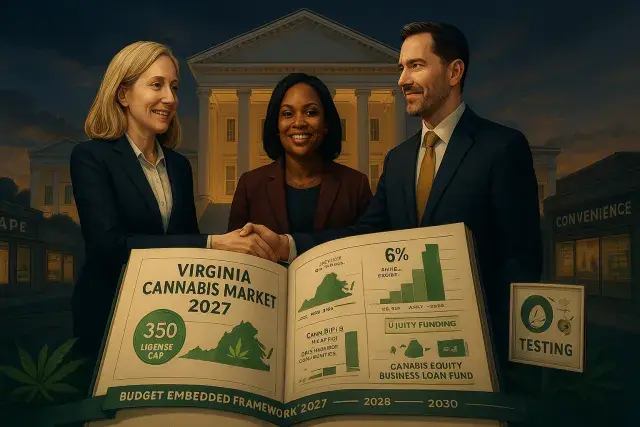
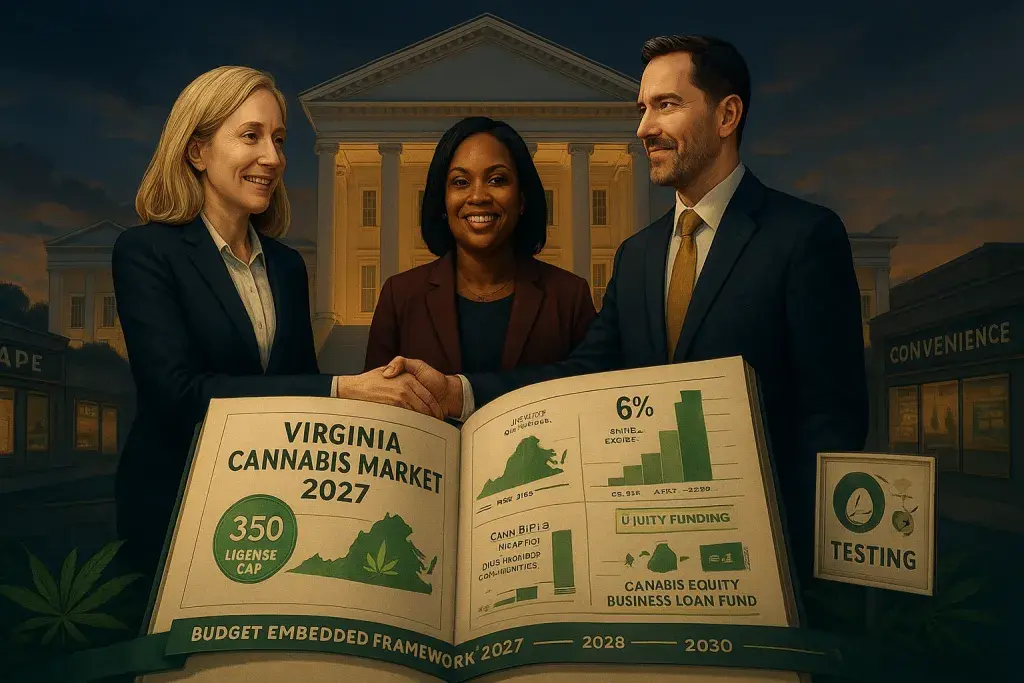
Virginia's path to a licensed adult-use cannabis retail market is now running through the state budget - not standalone legislation. Gov. Abigail Spanberger, who vetoed the original retail cannabis bill weeks ago, reached a compromise with Senate sponsor Lashrecse Aird and House sponsor Paul Krizek on June 16, embedding a framework for the market inside the fiscal year 2027 budget proposal. The deal sets a July 1, 2027 launch date, a 350-license retail cap, and a tiered tax structure - but it only takes effect if the General Assembly passes a budget before June 30.
For operators and investors watching Virginia, the structure here mirrors how other states have handled contested market launches when direct legislation stalls. States like Alaska went through their own drawn-out regulatory processes before retail sales began - and vendors who serve those markets, from dispensary pos alaska operators to compliance software providers, know that budget-embedded frameworks can shift timelines unpredictably. Virginia's approach adds another variable: the entire retail framework lives inside an appropriations bill that two chambers have been feuding over for weeks. That is not a minor procedural detail. If the budget fails or gets replaced with a stopgap spending measure, the cannabis provisions almost certainly fall out with it.
What the compromise actually contains matters a great deal for anyone sizing up Virginia as a market opportunity. The 350-license cap, phased in over two years with geographic distribution authority resting with the state regulator, will shape wholesale pricing, real estate strategy, and inventory planning for years. A capped, phased rollout limits the kind of rapid oversaturation that compressed wholesale margins in states like Oregon and Michigan. That is not guaranteed good news for consumers - constrained supply can sustain elevated retail prices - but for licensees, a disciplined cap provides some protection against immediate margin erosion.
Tax Structure and Equity Funding: What Operators Should Model Now
The tax framework is relatively straightforward on its face. A 6% Virginia cannabis excise tax applies at market launch, rising to 8% after July 1, 2029. Localities can layer on an additional 1% to 3% sales tax. That means retail operators in some jurisdictions could face a combined tax burden reaching 11% before accounting for federal tax liability under IRS Section 280E - which still applies to cannabis businesses operating under federal prohibition. For a dispensary projecting margins in a new, price-competitive market, that math needs to be modeled carefully before a license application gets filed.
On the equity side, 75% of licensure revenue in the first year flows to the Cannabis Equity Business Loan Fund, targeting business owners in designated areas. Virginia is also establishing a Cannabis Impact Business Support Team to assist startups. These provisions reflect a policy pattern that has emerged across adult-use states - prioritizing access for communities historically affected by prohibition enforcement - though how effectively such funds translate into operational businesses varies considerably depending on program design and administrative execution.
Product Safety and the Intoxicating Hemp Problem
One of the sharper provisions in the compromise addresses so-called intoxicating hemp products sold outside the licensed cannabis channel - vape shops, convenience stores, and similar retail environments. Virginia's framework commits to strict testing, labeling, and regulatory oversight of these products. That is significant. Unregulated hemp-derived intoxicants have undercut licensed dispensary sales in several states by offering lower-priced, often untested products to consumers who cannot easily distinguish them from licensed, lab-tested cannabis. Virginia is signaling it intends to tamp that down with clear enforcement authority.
From a compliance standpoint, this matters beyond just the licensed retailers. Brands, product manufacturers, and distributors operating in the hemp space will need to understand where Virginia draws the line on what requires a cannabis license versus what remains in the general retail channel - and that regulatory line is likely to be drawn tightly. Retailers in the licensed market should watch how enforcement of these provisions rolls out in practice, because it will directly affect their competitive position against the gray market.
The Budget Dependency Is the Real Risk to Watch
Here is the catch that every operator, investor, and vendor eyeing Virginia needs to keep front of mind: none of this is law yet. The cannabis compromise exists as budget language in the House proposal, with a Senate placeholder to follow. A stalemate between the two chambers over data center tax exemptions has already put the June 30 budget deadline under pressure, and a skinny stopgap budget - which some legislators have floated as a fallback - would almost certainly strip out the cannabis provisions entirely.
Sen. Aird has been explicit that this compromise is a foundation, not a final answer. That framing is honest. The 2027 General Assembly session will set specific revenue allocations, and future sessions will inevitably revisit license caps, tax rates, and equity fund performance. Virginia's market, if it launches on schedule, will look different by 2030 than it does on paper today. Operators planning capital expenditures, real estate commitments, or licensing costs around a July 2027 open date should build contingency into those models - because a missed budget deadline resets the entire timeline.
The tone at the June 16 press conference was conciliatory. The budget calendar is not.