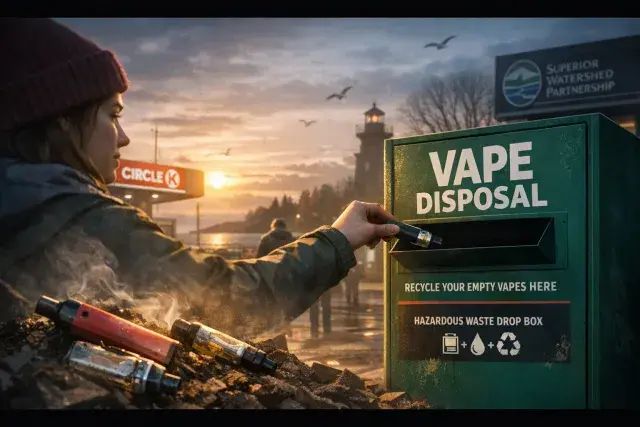
Residents of Marquette, Michigan, can soon dispose of empty cannabis and nicotine vape cartridges at designated drop-off boxes to prevent hazardous materials from contaminating landfills. The Fire Station, a local cannabis dispensary, partners with the Copper Country Collective of Lake Superior Schools (CSCLS) to launch the program on March 4 at sites including the Peter White Public Library and the Superior Watershed Partnership Climate Office. Circle K stores and Kenny’s Corner Store will handle nicotine cartridges, addressing a growing waste challenge from disposable vaping devices.
Hazardous Components Fuel Landfill Risks
Empty vape cartridges pose significant environmental threats because they retain residual e-liquids and contain electronic parts like lithium-ion batteries and heating coils. CSCLS Outreach Coordinator Chris Crouse explains that even drained devices hold traces of these oils, which include propylene glycol, vegetable glycerin, flavorings, and sometimes nicotine or cannabinoids. These substances leach into soil and water when discarded in regular trash, contributing to groundwater pollution and harming aquatic life over time.
Vaping hardware adds to the problem: batteries risk fires in waste facilities, while plastics and metals do not break down easily. Landfills worldwide struggle with e-waste, and vapes exacerbate this as single-use items that mimic traditional cigarettes but with far more complex innards. Michigan's regulatory framework classifies many vape components as hazardous, yet convenient disposal options remain scarce outside major cities.
Local Initiative Tackles Broader Waste Trends
This effort reflects rising concerns over disposable vapes amid surging popularity in cannabis and nicotine products. Sales of vape devices have climbed steadily since legalization expansions, leaving communities to manage the aftermath without widespread recycling infrastructure. Marquette's program targets accessibility by placing boxes in public libraries, environmental offices, and convenience stores, encouraging participation from everyday users.
The Fire Station aims to extend recycling directly at its dispensaries but awaits state approval to navigate permitting hurdles. Such partnerships between retailers and educators signal a shift toward producer responsibility, mirroring trends in battery and electronics recycling. By diverting waste early, the initiative reduces incineration emissions and landfill volume, preserving the Lake Superior watershed's delicate ecosystem.
Path Forward for Sustainable Disposal
Successful pilots like this one could inspire statewide solutions, as regulators weigh incentives for safe handling of cannabis-related waste. Users benefit from clear guidance: rinse cartridges if possible, but drop them off regardless to avoid improper disposal risks. Long-term, expanded facilities might recover valuable metals, cutting mining demands and closing the loop on consumption.
Marquette's move underscores how small-scale actions combat pollution from modern habits, fostering cleaner communities without relying on distant processing plants.