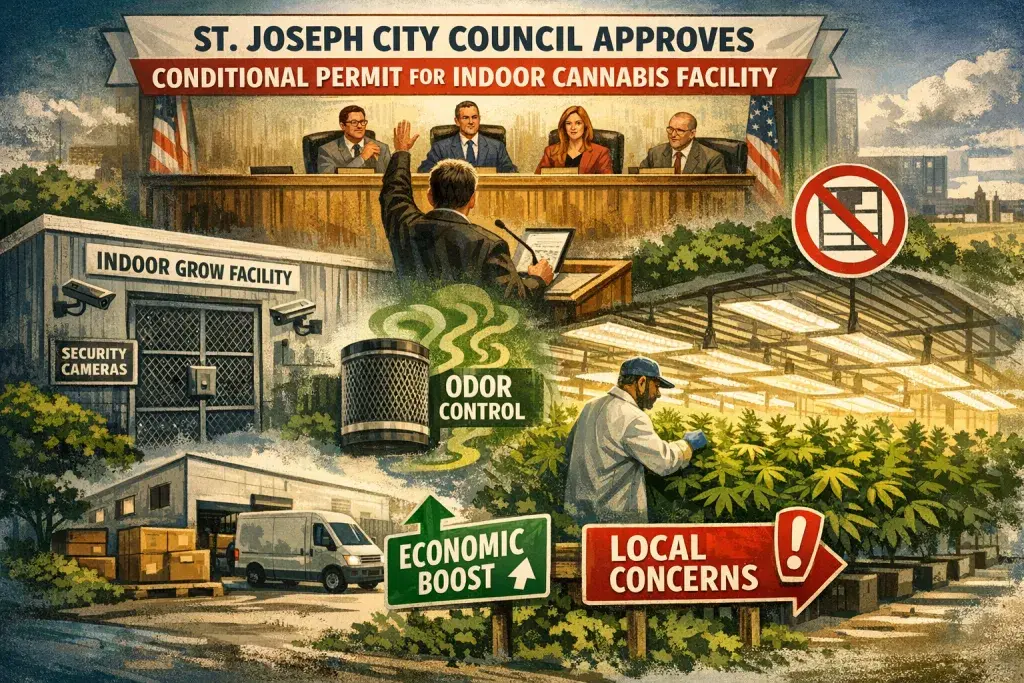
St. Joseph, Minn., is set to host its first indoor cannabis cultivation operation after the city council unanimously greenlit a conditional use permit on September 15. Green Cross, C-Corp, plans to occupy 3,300 square feet in a former manufacturing building at 417 First Ave. NE, with owner Daniel Clark eyeing a December opening pending state approval. This move reflects Minnesota's uneven patchwork of local cannabis policies, where small towns weigh economic boosts against neighborhood concerns.
Strict Conditions Address Odor and Security Fears
The permit isn't a blank check. Council members imposed safeguards—security cameras, odor containment to prevent nuisances, and a locked gate over trash receptacles—to keep operations discreet. Clark, drawing from his past running a medical marijuana delivery service, assured the board that sealed rooms and inward air flow would trap smells inside; waste gets composted or run through carbon filters. No exterior signage, no visible growing from the street. Operations stay buttoned up, with just Clark and one other employee tending 50,000 watts of LED lights during daylight hours: 8 a.m. to 6 p.m. weekdays, shorter on Saturdays.
What's striking here? Nearby Sauk Rapids hit pause in July, enacting a moratorium on cannabis businesses to scrutinize land-use fits—odor chief among them. St. Joseph pressed ahead, betting on Clark's containment pitch. The facility feeds Minneapolis markets, Uptown especially, with shipments every two weeks to monthly. Shipments, not sales; this is cultivation only, tucked into light industrial zoning tweaks the council passed over the summer.
Expansion Plans Signal Local Hiring, State Hurdles Remain
Clark registered Green Cross in March using his Hopkins address, distinct from another Minnesota entity with the same name. He leases from building owner Cory Ehlert and expects state regulators to rubber-stamp quickly now that St. Joseph has signed off—"if the city responds fast, it speeds things up," he told council. Optimism aside, Minnesota's cannabis framework demands layers of review; cultivators need Office of Cannabis Management nods beyond local permits.
Scale could grow. Lights might ramp to 200,000 watts, space to 4,150 square feet—a 25% bump requiring fresh approval. Clark pledged to hire locally then: "As this expands, we're happy to bring on St. Joseph folks." That carrot might sway holdouts in a town not exactly buzzing for bud farms. Yet it underscores a broader tension in red-state Minnesota, post-2023 recreational legalization: rural spots eye tax revenue and jobs from a crop once demonized, even as suburbs fortify bans.
Broader Ripples in Minnesota's Cannabis Rollout
St. Joseph's nod follows ordinance changes allowing indoor grows in industrial zones—a pragmatic pivot. Cultivators like Green Cross fill a supply gap for dispensaries, but locals fret downstream effects: traffic, smells seeping despite filters, or property values. Clark's low-profile model—rented space, minimal staff—aims to blunt those. Still, if expansion hits, the council faces round two.
To put it plainly, this facility tests how central Minnesota threads cannabis into its economy. Success could lure more; failure—say, a whiff complaint—might echo Sauk Rapids' caution. Either way, St. Joseph plants a flag in a state reshaping itself around legalization's long tail.