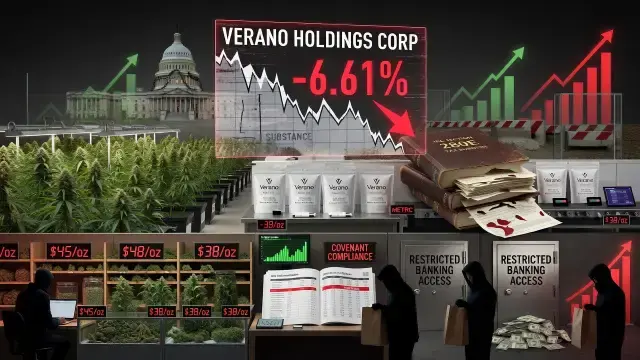
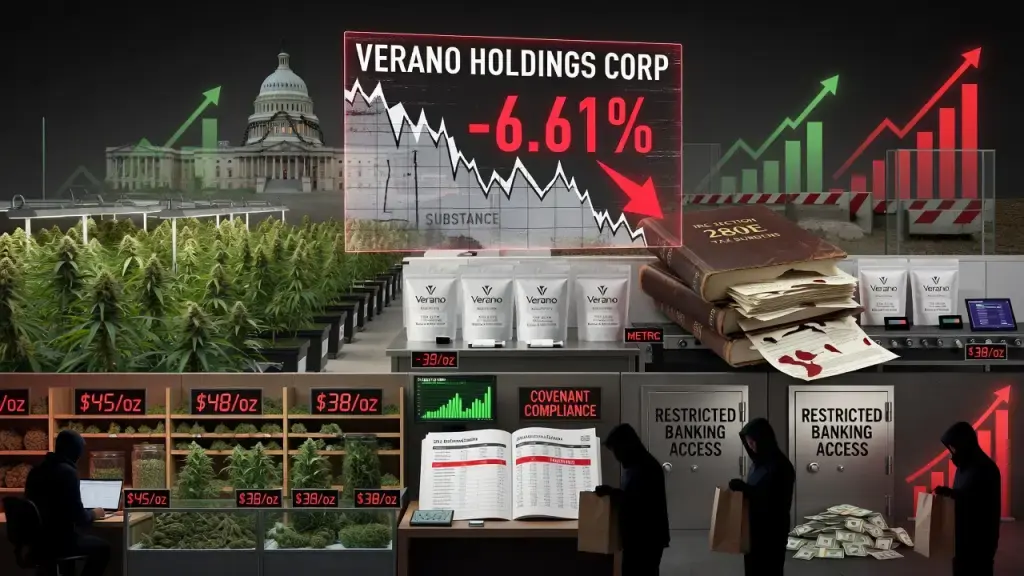
Verano Holdings Corp shares fell 6.61% on November 4, 2026, a single-day move that says less about the company itself and more about the structural squeeze facing multi-state cannabis operators heading into year-end. The decline extends a pattern that has dogged US cannabis equities throughout 2026: thin margins, federal inertia, and investors who have simply grown tired of waiting.
Why the Sell-Off Isn't Really About Verano
Verano operates a vertically integrated model - cultivation, processing, and retail under one roof - across a wide footprint of US medical and adult-use markets. That scale is usually a selling point. In practice, though, scale doesn't insulate a multi-state operator from the forces currently working against the entire sector. Wholesale cannabis prices keep sliding in mature adult-use states as licensed cultivator counts climb faster than consumer demand. Add in an illicit market that skips lab testing costs, compliant packaging requirements, and excise tax altogether, and licensed retailers are competing with one hand tied behind their back on price.
Then there's the federal piece, which never seems to resolve. Cannabis remains a Schedule I substance, which means Verano and its peers still operate without normal access to banking, still face IRC Section 280E's disallowance of standard business expense deductions, and still can't list on major US exchanges. Each of those constraints shows up directly on the income statement and the cap table. None of it is new. What's striking here is how little has changed despite years of reform talk in Washington.
The Mechanics Behind the Margin Problem
Dispensary economics in saturated adult-use states have become a volume game with shrinking returns. Retail footprints that once commanded premium wholesale menus now discount to compete, and budroom inventory that doesn't move fast enough becomes a carrying cost rather than an asset. Multi-state operators like Verano manage this through SKU rationalization, brand consolidation, and tighter seed-to-sale tracking via systems like METRC - but optimization only goes so far when the underlying tax structure still treats cannabis companies differently than any other consumer goods business.
- Section 280E blocks standard deductions, inflating effective tax rates well above comparable retail sectors
- State-level price compression in mature markets pressures both wholesale and retail margins simultaneously
- Illicit market competition undercuts licensed pricing while avoiding compliance and testing costs
- Restricted capital markets access raises the cost of debt and limits refinancing options
What This Means for Operators, Lenders, and Suppliers
For dispensary operators and wholesale suppliers watching Verano's stock, the read-through is less about one company's share price and more about financing conditions across the board. Elevated debt loads taken on during the sector's earlier growth years now sit against a backdrop of higher interest costs and compressed cash flow - a combination that raises real questions about covenant compliance for several multi-state operators, not just Verano. Landlords leasing retail space to cannabis tenants, payment processors building cashless workarounds in a still-restricted banking environment, and compliance software vendors serving this client base should all expect continued caution in capital spending across the industry.
None of this changes the underlying demand trend, which remains intact as more consumption shifts from illicit to licensed channels over time. But the gap between that long-term opportunity and near-term earnings realization has only widened. Until federal rescheduling, banking reform, or some other concrete catalyst materializes, cannabis equities are likely to keep trading at a discount to ordinary consumer retail peers - and corrections like Verano's November slide will keep showing up as a symptom of the sector's unresolved structural problems, not a verdict on any single operator's execution.