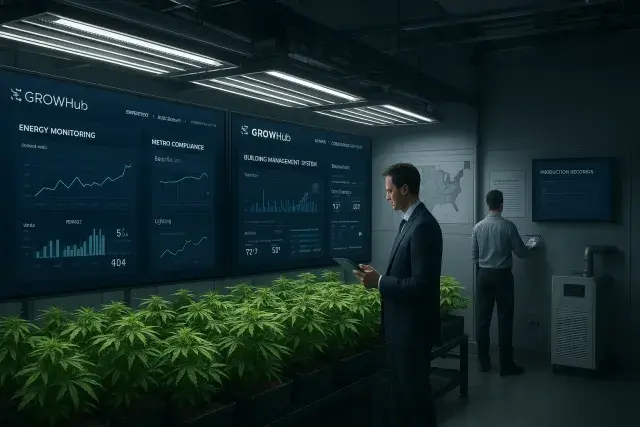
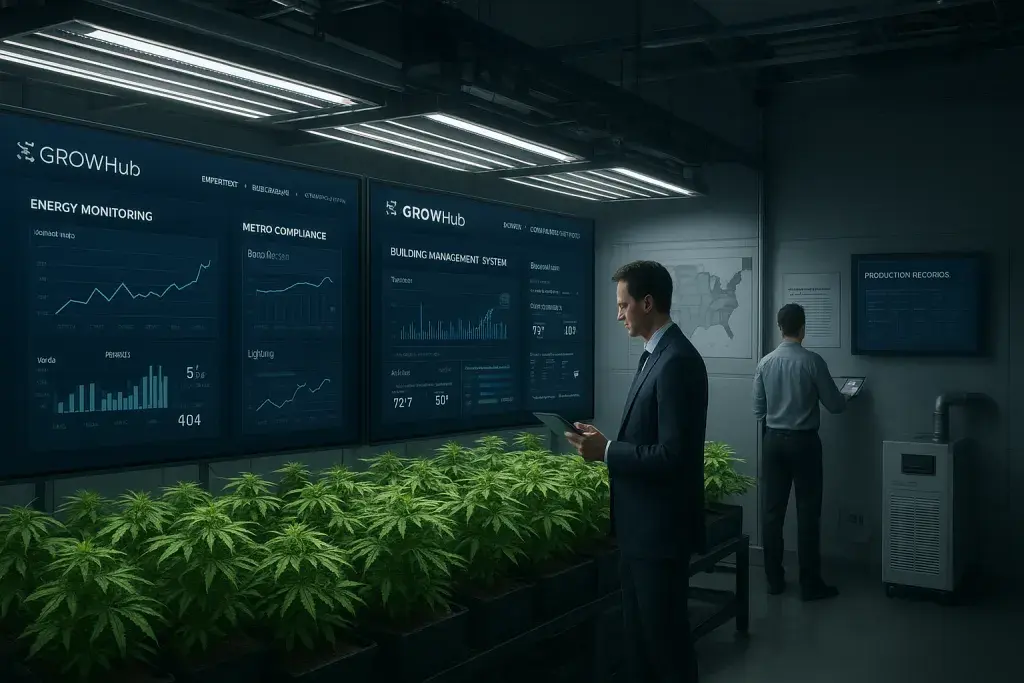
TSRgrow has rolled out a significant 2026 update to GROWHub, its cultivation software platform, adding tools that pull energy monitoring, compliance workflows and facility operations into a single connected system. The expansion targets a persistent operational headache for commercial cultivators: data scattered across lighting controllers, spreadsheets, environmental sensors and compliance software that rarely talk to each other. For multi-state operators managing several cultivation sites, that fragmentation isn't just inconvenient - it's a real drag on decision-making and, eventually, on the bottom line.
GROWHub functions as the software layer behind TSRgrow's LED lighting and Remote Power infrastructure, meaning it already sits at the center of how a facility grows its crop. The 2026 build adds expanded analytics, batch-record functionality, Metrc integration and Building Management System connectivity, effectively turning the platform from a lighting-control tool into a broader intelligence system for cultivation teams. That kind of consolidation mirrors a pattern seen elsewhere in regulated cannabis retail, where operators increasingly want fewer, deeper platforms rather than a patchwork of point solutions - a dynamic also visible in retail-facing software such as the cannabis retail platform for Ohio, where compliance and sales data need to move together rather than live in separate silos.
Why Batch Records and Metrc Integration Matter
Compliance in cultivation isn't a paperwork afterthought; it's a running record that regulators can, and do, ask to see. Expanded batch-record capabilities let operators tie cultivation conditions, lighting settings and operational data directly to individual crop cycles, rather than reconstructing that history after the fact from disconnected logs. Metrc integration then connects that record to the track-and-trace systems regulators already require in licensed markets. In practice, though, the value isn't just about avoiding a bad audit. It's about having a defensible, traceable production history that holds up when a regulator, insurer or buyer asks how a batch was actually grown.
That matters more as federal rescheduling discussions continue and state programs tighten reporting expectations. Operators who can produce clean, cycle-by-cycle documentation are better positioned for whatever compliance regime comes next - whether that means new testing rules, revised labeling requirements, or expanded reporting tied to interstate commerce questions still working through Congress.
Energy Data as an Operating Cost, Not an Afterthought
Lighting is one of the largest recurring costs in indoor cultivation, and GROWHub's energy-monitoring tools let growers evaluate power consumption alongside yield and environmental data rather than as a separate utility line item. That's a meaningful shift. Cultivators have long optimized for grams per light or grams per square foot; folding kilowatt-hours into that same analysis gives operators a more complete read on true production costs - information that matters when margins are already squeezed by wholesale price compression and 280E tax exposure.
Building Management System connectivity extends that logic facility-wide, letting HVAC, dehumidification and other systems share data with cultivation software instead of operating in isolation. The result, on paper, is a more connected facility. Whether that translates into measurable efficiency gains will depend on how consistently operators actually use the reporting tools rather than defaulting back to manual spreadsheets out of habit.
What It Means for Operators Weighing Software Investment
Software consolidation platforms like this raise a fair question for any cultivation team: is centralizing data worth the integration lift? For smaller single-site operators, the answer isn't automatic. But for multi-state operators juggling different compliance regimes, environmental targets and energy costs across facilities, a connected record of what happened during each crop cycle - and why - offers something spreadsheets can't: a repeatable, auditable basis for improving the next harvest instead of guessing at it.