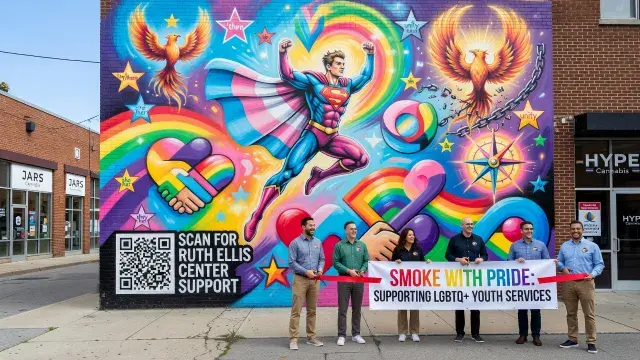
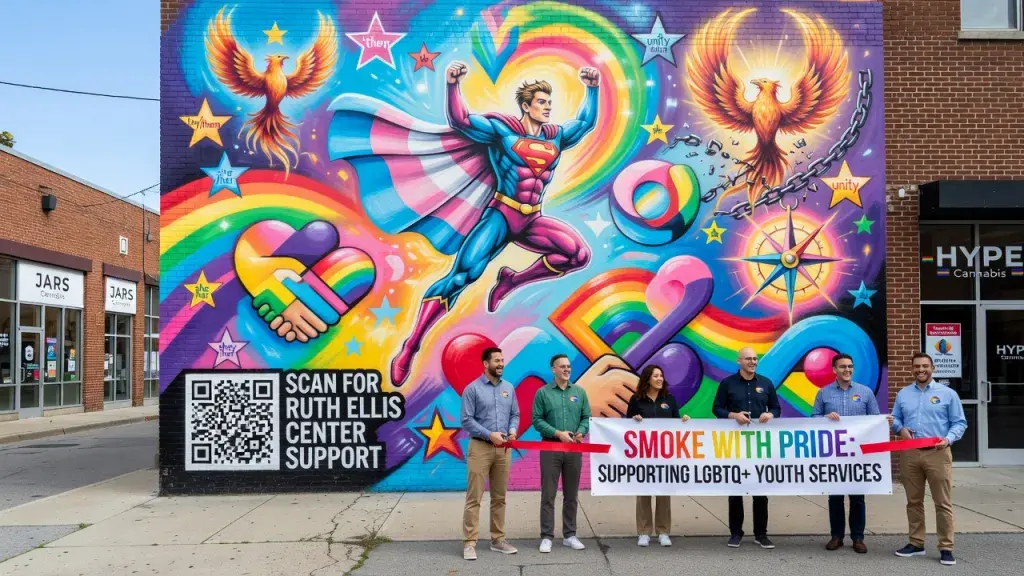
A ribbon-cutting ceremony this week marked the debut of "Polychromatic Super You," a 40-foot by 25-foot mural now installed in the alley at 258 W. Nine Mile Rd. in downtown Ferndale. The piece, painted by Michigan artist Joey Salamon, was commissioned jointly by cannabis retailers JARS Cannabis and HYPE Cannabis as part of a broader Pride campaign tied to charitable giving rather than product promotion.
The mural anchors the companies' Smoke with Pride initiative, which directs 10 percent of proceeds from HYPE products sold at JARS locations, plus 100 percent of proceeds from a dedicated JARS x HYPE kit, to Detroit's Ruth Ellis Center, a support services organization for at-risk LGBTQ+ youth. That kind of layered donation structure isn't simple to administer. Retailers running cause-marketing programs on top of regulated cannabis sales have to track designated SKUs separately in their point-of-sale systems, reconcile donation totals against actual transactions, and keep that accounting clean for tax and audit purposes. Multi-state and single-market operators alike are increasingly leaning on retail infrastructure built for this kind of granularity - platforms like cbd point of sale washington illustrate how compliant point-of-sale tools now handle promotional carve-outs, product-level reporting, and charitable allocations without disrupting seed-to-sale tracking obligations.
Public Art as a Compliance-Safe Marketing Channel
Cannabis advertising rules in Michigan, like most adult-use markets, restrict how retailers can promote products directly to the public - no billboards visible from schools, no health claims, no messaging that appeals to minors. A commissioned mural sidesteps most of that friction. It's not an ad for a specific product or potency; it's public art tied to a cause, which gives operators a way to build brand visibility and community goodwill without tripping the wires that regulators watch closely. That distinction matters for compliance teams evaluating any sponsorship or cause-marketing deal: is the messaging promoting consumption, or is it promoting a value the company wants associated with its name? The QR code embedded in the mural reinforces that separation, directing visitors to donation resources and information about the Ruth Ellis Center rather than a menu or storefront.
What the Partnership Signals for Retail Operators
Cross-brand collaborations like the JARS-HYPE campaign are becoming more common as operators look for ways to differentiate in crowded adult-use markets where price competition on flower and vape SKUs keeps compressing margins. Cause-based partnerships offer a way to build loyalty and press coverage without discounting product or fighting for wholesale shelf space. For landlords and municipal officials in cannabis-friendly retail corridors like downtown Ferndale, public art commissioned by licensed operators also reframes the storefront conversation - away from stigma and toward civic investment. That's a slow-moving shift, and it doesn't erase the underlying regulatory realities operators still answer to: 280E tax burdens, strict packaging and labeling rules, and local zoning limits on where dispensaries can even operate. But it does show how retailers are finding room to operate as community stakeholders, not just permitted businesses.
Consumer Safety Context Still Applies
None of the mural's charitable framing changes the underlying product rules dispensary customers should expect. Cannabis products sold at JARS and HYPE locations remain subject to state lab testing, batch-level COA disclosure, and age verification at the point of sale.
- Purchase and consumption remain restricted to adults 21 and older in Michigan's adult-use market.
- All products referenced in the campaign are subject to standard state testing and compliant packaging requirements.
- Donation percentages apply to designated SKUs only and are not a discount or inducement to purchase.
The mural itself carries no product promotion - it's a community piece with a donation mechanism attached, which is precisely the kind of structure compliance officers should look for when evaluating whether a marketing campaign crosses into promotional territory regulators might flag.