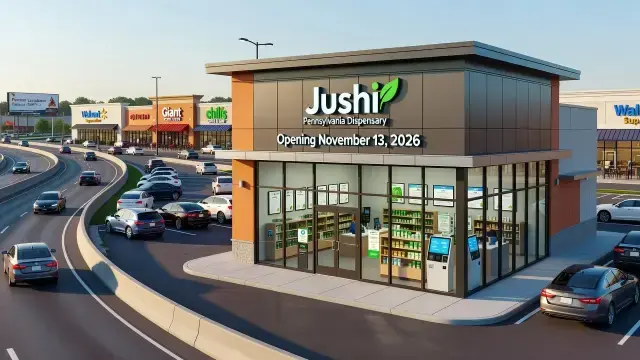
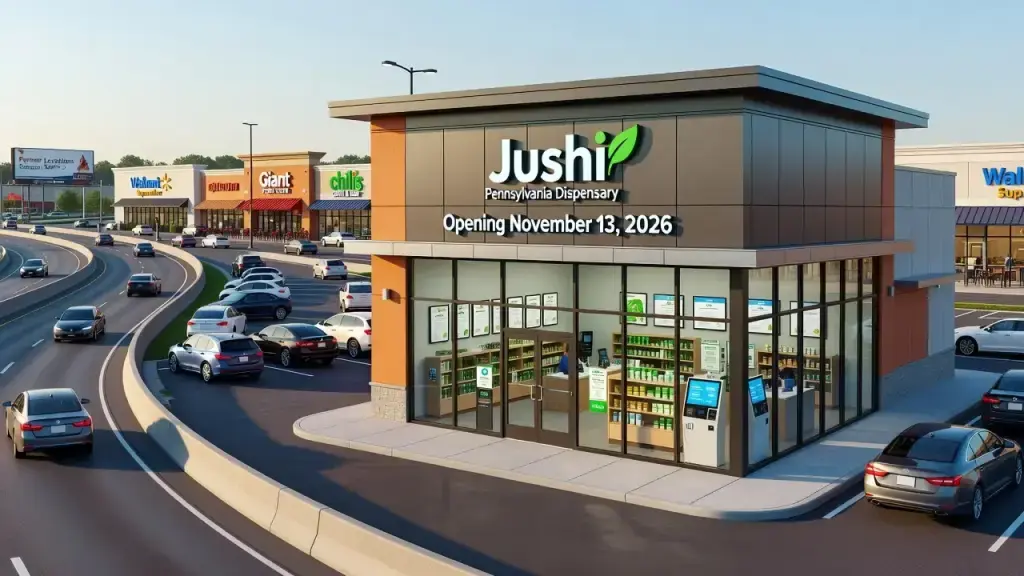

Jushi Holdings Inc. is moving one of its Pennsylvania medical marijuana dispensaries from Sansom Street to a new location in Hamburg, with the relocated store set to open to patients on November 13, 2026. The shift, inside Tilden Township in Berks County, says something larger about how multi-state cannabis operators are rethinking where their stores actually sit relative to patients, not just where a license happened to land years ago.
Why Relocation, Not Just Expansion
Dispensary relocations get less attention than new store openings, but in a mature medical market like Pennsylvania, they often matter more. A license tied to a weak retail corridor can quietly drag down performance for years. Moving the Sansom St. location to a site near PA Route 61 and Interstate 78 - in a retail corridor the company says draws more than two million visits annually from surrounding national retailers, grocers, and dining destinations - is a straightforward bet on foot traffic and drive-time convenience for patients across Berks, Schuylkill, and nearby counties. That's the quiet logic behind most dispensary relocations: the underlying license and patient registry carry over, but the site economics get a reset.
What Regulatory Approval for a Move Actually Involves
Relocating a licensed dispensary isn't as simple as signing a new lease. Pennsylvania's medical marijuana program requires operators to secure state approval before transferring operations to a new address, with review covering zoning compliance, security plans, and distance requirements from schools and other sensitive locations. Seed-to-sale tracking records, inventory transfer logs, and compliant packaging protocols all have to carry over cleanly to the new site before the first sale can happen. For multi-state operators managing dozens of retail locations, that paperwork lift is routine, but it's not trivial - a misstep in the transfer process can delay an opening by weeks.
What It Signals for Jushi's Pennsylvania Footprint
Jushi frames the move as part of an effort to "optimize" its Pennsylvania retail footprint, language that in practice usually means consolidating underperforming real estate into stronger locations rather than simply adding square footage. For a company operating in a state with a capped medical license structure, every retail address matters more than it would in an unrestricted adult-use market. There's no option to simply open a new store down the street if the current one isn't working; relocation becomes the main lever operators have to fix a site that isn't pulling its weight.
Access, Not Just Convenience
Framed around patient access, the relocation also reflects a broader reality of medical cannabis retail: proximity drives adherence to legal, regulated channels. Patients who face long drives or inconvenient store hours are more likely to lapse out of the registered system altogether. A location near a major interstate interchange, with extended daily hours, reduces that friction - though it doesn't change the underlying compliance obligations. Age verification, patient certification checks, and lab-tested product batches with accompanying certificates of analysis remain non-negotiable regardless of where the storefront sits. Convenience is a retail strategy; it isn't a substitute for the compliance infrastructure that keeps a medical program credible with regulators and the public.