
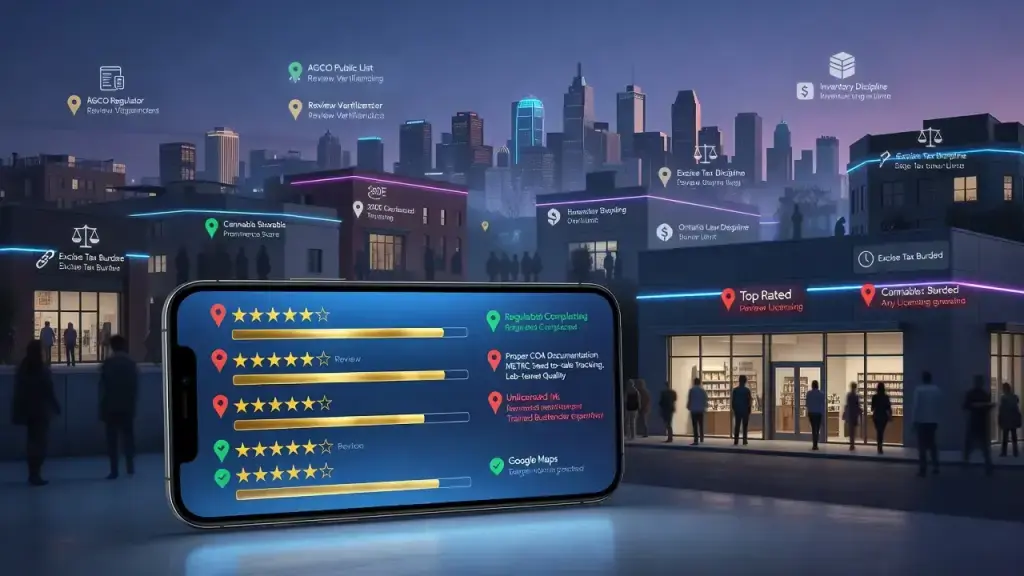

A study of dispensary visibility across dozens of U.S. and Canadian cities found that top placement in local map results tracks review volume and listing completeness, not whether a retailer is licensed, well-staffed, or selling fresh, properly tested flower. In parts of Ontario, researchers couldn't even match top-ranked map listings to the province's own authorized-retailer records. For an industry still fighting for legitimacy against illicit operators, that gap matters.
What the Algorithm Actually Measures
Local search platforms are fairly transparent about their own mechanics: proximity, listing completeness, and what they call "prominence," a mix of review counts, reply rates, and external mentions. None of that touches the budroom. A dispensary with a thin COA file, inconsistent batch testing, or budtenders who can't explain a terpene profile can still out-rank a tightly run shop next door, provided it has collected a few thousand reviews and keeps its hours updated. Review volume is a proxy for foot traffic and longevity, not for compliance posture or staff training. Operators who treat their Google Business Profile as a marketing afterthought are leaving visibility on the table; operators who treat it as a substitute for actual retail quality are fooling themselves.
Licensing Blind Spots Are the Real Risk
The more unsettling finding involves Ontario, where several map-listed dispensaries couldn't be matched by name or address to AGCO's public list of authorized stores, and where some listings showed hours that exceed what provincial law permits for licensed retailers. That doesn't prove any specific seller was operating without authorization. It does mean a 5.0 rating and a top map slot carry zero regulatory weight. For consumers, that's a consumer-protection problem: products from unlicensed sellers haven't gone through the same lab testing, compliant packaging, and seed-to-sale tracking that regulated retailers are required to maintain. For licensed operators, it's a competitive distortion. A compliant shop absorbing excise tax, 280E exposure, and METRC reporting costs can be out-ranked by a listing that hasn't cleared any of those hurdles.
Where This Leaves Store Operators
The practical implication for dispensary owners is that ranking well and operating well are separate projects, and conflating them is a mistake. A complete, accurate listing with prompt review responses is table stakes for visibility; it isn't a substitute for inventory discipline, accurate shelf-to-menu pricing, or staff who can walk a customer through lab results. The research also found that many of the best-reviewed dispensaries in cities like Los Angeles and New York barely appeared on page one at all, which suggests word-of-mouth reputation and online visibility are increasingly disconnected. For regulators, the Ontario findings point to a narrower but sharper issue: licensing databases need to be easy for both consumers and platforms to cross-check, or map rankings will keep outrunning enforcement.
What Shoppers Should Verify Themselves
- Confirm licensing status directly through the state or provincial regulator's own tool or published list, not through a dispensary's website claims.
- Check recent reviews separately from the overall average, since a strong historical rating can mask recent declines in service or inventory.
- Verify that online menus match in-store stock and pricing before assuming either is current.
- Ask whether lab results and COAs are available and how to access them, since testing requirements vary by product and jurisdiction.
None of this is an argument against using local search to find a starting point. It's an argument against stopping there.