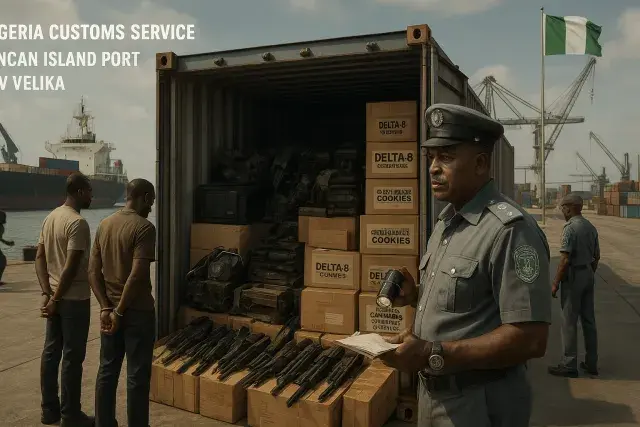
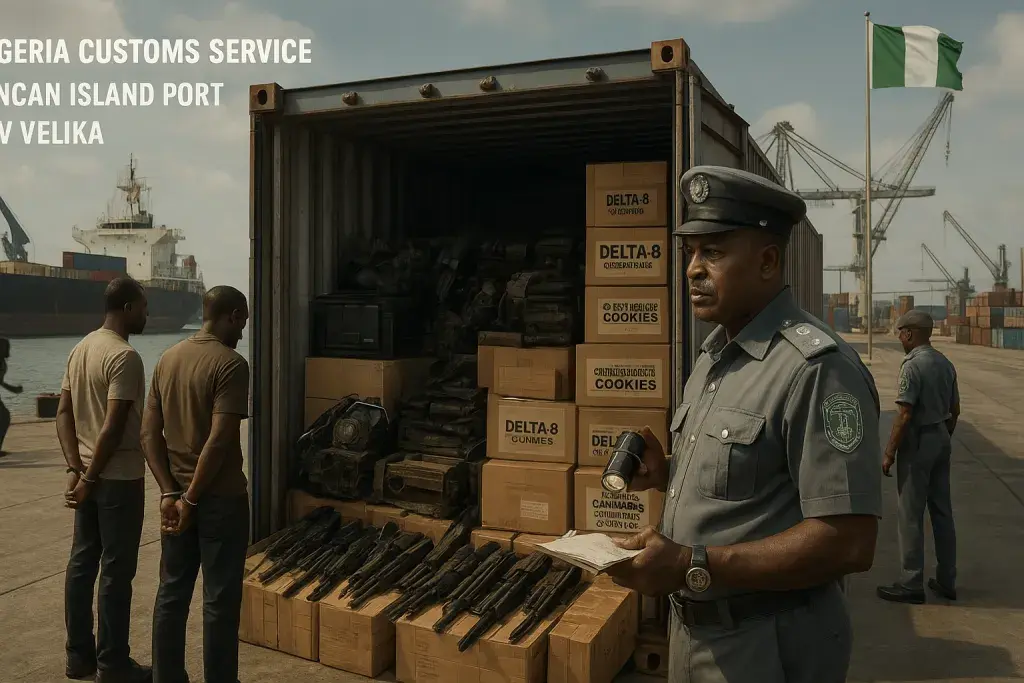
A single container flagged by risk-management algorithms at Tincan Island Port has pulled back the curtain on two distinct smuggling operations running through Nigeria's formal trade channels. The Nigeria Customs Service (NCS) announced on 6 August 2026 that it had intercepted knocked-down components for more than 140 pump-action rifles hidden inside cargo that arrived aboard MV VELIKA, alongside a separate seizure of cannabis-infused products valued at over ₦373.8 million. Two people are in custody; a third suspect remains at large.
What's striking here is the method, not just the manifest. Investigators say the cannabis-infused cookies, gummies and pre-roll products - 109 cartons of Delta-8 pre-roll cookies, 125 cartons of Delta-8 gummies, and 73 cartons of standard cannabis-infused cookies - were packed inside 40-foot containers alongside used vehicles, generators and batteries, a layering tactic designed to bury contraband under legitimate freight. For licensed cannabis operators anywhere in the world, this is a pointed reminder of why chain-of-custody documentation matters so much; the same intelligence-driven risk profiling that caught this shipment mirrors the logic behind cannabis compliance software used in regulated markets to track products from cultivation through retail sale, flagging discrepancies before they become diversion events. cannabis compliance software
Why Concealment Tactics Matter for Legitimate Trade
Smugglers exploiting mixed-cargo containers put honest importers and freight forwarders in a difficult position. Every seizure tied to concealed goods inside routine shipments - vehicles, appliances, batteries - increases scrutiny on unrelated cargo moving through the same port command. That translates into longer inspection times, more documentation demands and, in some cases, reputational damage for logistics firms with no actual connection to the contraband. In markets where cannabis is legally regulated, similar concerns drive strict manifest reconciliation requirements, batch-level tracking and third-party lab testing with certificates of analysis (COAs) attached to each shipment. Nigeria does not operate a regulated adult-use cannabis market, so any cannabis-infused product entering the country arrives outside legal channels entirely, which is precisely why Customs treated the find as contraband rather than a labeling or licensing dispute.
The Election-Season Angle
Comptroller General Adewale Adeniyi tied the timing directly to Nigeria's approaching election cycle, warning that "men of the underworld" often try to move weapons and other prohibited goods through ports and airports during periods of heightened political activity. That's a fair operational concern: illicit firearms moving in tandem with unregulated intoxicating products suggests organized networks testing multiple revenue and supply lines at once, not isolated incidents. The CGC also addressed internal risk, stating the Service "will not harbour" personnel who serve as accomplices or use their positions to wave through prohibited imports - a acknowledgment that port security is only as strong as its weakest compliance link, whether that weakness sits in a shipping manifest or in personnel vetting.
What This Means for Cross-Border Cannabis Commerce
For companies operating in jurisdictions where cannabis products are legally manufactured and sold, incidents like this reinforce a basic operational truth: cannabis-infused goods, even where legally produced, do not automatically carry cross-border legality, and shipping them into markets without a regulated framework exposes everyone in the supply chain to seizure, forfeiture and criminal liability. Delta-8 products in particular occupy a contested regulatory space even within markets that permit adult-use cannabis, given inconsistent state and national rules on hemp-derived cannabinoids. Exporters, wholesalers and logistics partners handling infused products should treat destination-country legality as a non-negotiable checkpoint, not an assumption.
- Concealment inside mixed legitimate cargo remains a persistent smuggling method requiring layered risk profiling at ports.
- Cannabis-infused products crossing into jurisdictions without adult-use or medical frameworks are treated as contraband, regardless of how they were manufactured or labeled abroad.
- Internal compliance integrity at customs and logistics firms is as significant a vulnerability as external smuggling tactics.
Adeniyi credited the Tincan Island Port Command and the Customs Enforcement Unit for the interceptions and called on the public to supply credible intelligence to support ongoing enforcement. For an industry still working out where legal cannabis commerce ends and criminal trafficking begins, cases like this draw the line with unusual clarity.