
North Carolina's cannabis advisory council is pointing toward a model that would look nothing like the dispensary chains operating in most legal states. Instead of licensed retailers competing for market share, the council formed by Gov. Josh Stein wants the state itself to control distribution and storefronts, treating cannabis more like liquor than like a typical regulated retail product. The recommendations are still in draft form, with a final vote expected in December, but the direction is clear enough to reshape how any future industry here would be built.
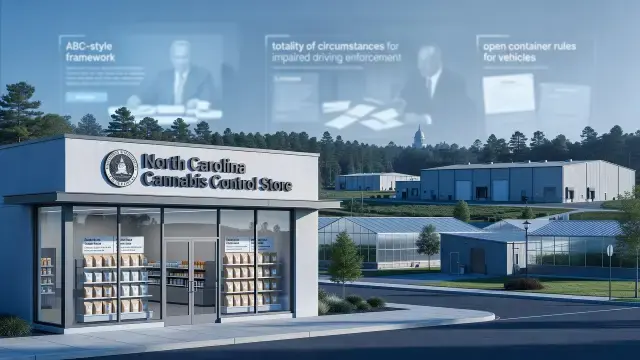
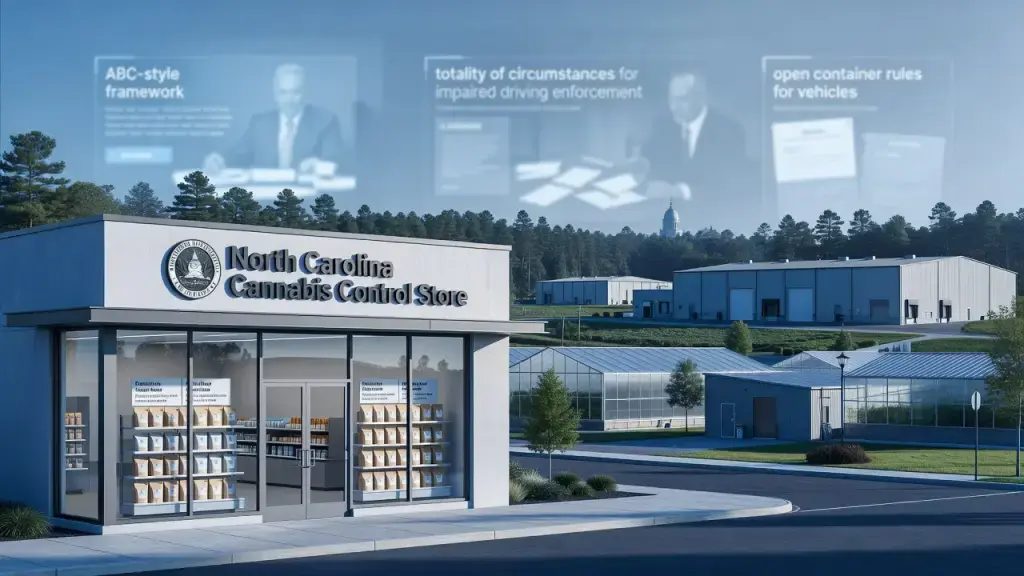
An ABC-Style Framework, Not a Dispensary Boom
For operators watching from other states, this is the detail that matters most. Private, licensed businesses would handle cultivation and processing - the farming and the extraction, essentially the wholesale side of the business. But the state would own the warehouses and, in all likelihood, control the stores themselves, possibly contracting with private companies to run day-to-day retail operations. That's a sharp departure from the vertically integrated multi-state operator model that dominates places like Illinois or Michigan, where a single license holder might grow, process, and sell under one roof. North Carolina's draft explicitly tries to avoid that kind of consolidation, with separate license tiers for small-scale and craft growers so they aren't forced to compete head-to-head with larger vertically integrated players. Fair enough as a goal - but an ABC-style system also means tighter margins for private businesses further up the chain, since the state, not the market, would set much of the retail experience.
What It Would Mean for Packaging, Marketing, and the Store Floor
The draft calls for limits on packaging and advertising that could appeal to minors, a now-familiar compliance concern across adult-use markets. More notable: stores would reportedly be barred from promoting use or running discounts and promotions, a restriction aimed at keeping public health ahead of commercial incentives. That's a meaningfully different retail environment than the promotional, brand-driven dispensary floors common in competitive adult-use states. No loyalty programs, no markdown events, no SKU-level price wars. For brands and processors, that changes how products get positioned - shelf placement and product quality may end up mattering more than marketing spend, since there wouldn't be much marketing to spend on.
Enforcement, Impaired Driving, and the Testing Gap
The council is also wrestling with a problem every cannabis market eventually hits: there's no reliable roadside test for THC impairment comparable to a blood alcohol reading. Rather than set an arbitrary per se limit, the draft leans on a "totality of circumstances" standard for DUI enforcement - a more subjective, labor-intensive approach for law enforcement, but one that avoids penalizing people for residual THC with no bearing on actual impairment. The council also wants cannabis kept out of reach in moving vehicles, open product restricted to the trunk, a rule mirroring open-container laws already familiar to alcohol retailers and distributors.
What Happens Next
None of this is law yet. The council plans to finalize recommendations by year's end and send them to Stein, but it will be up to the General Assembly - where House Democrats are expected to push harder on decriminalization and expungement next year - to actually act. Public comment is open through the end of the month, and the volume of submissions suggests this isn't a quiet policy footnote. For operators, suppliers, and investors eyeing North Carolina, the message right now is: watch the framework, not the calendar. A state-controlled retail system changes the entire business case for entering this market, regardless of when legalization might arrive.