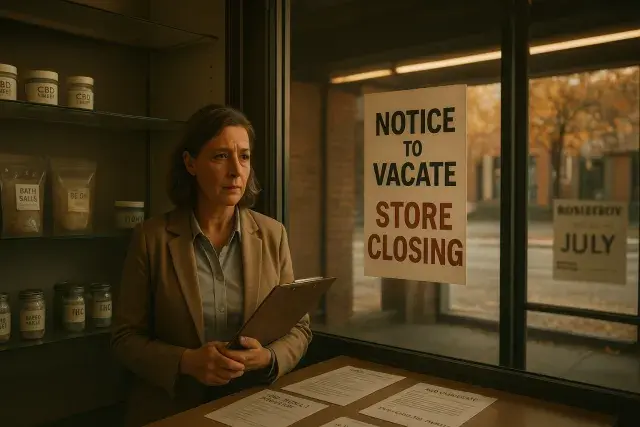
Before Virginia's anticipated adult-use cannabis market even opens its doors, at least one established hemp retailer is already making exit decisions. Barbara Biddle, who operates two District Hemp Botanicals stores in the Manassas area, has given notice to her landlord to shutter one location - a concrete signal that the regulatory and competitive pressures bearing down on hemp shops are already reshaping the retail map, months before any licensed dispensary sells its first adult-use unit in the commonwealth.
The convergence of two separate regulatory timelines is creating real operational uncertainty for small hemp operators. Federal hemp definition changes - stemming from Congress's earlier decision to open the door to broader hemp markets - are set to take effect this November, while Virginia's potential legal cannabis market is currently slated to begin next July, contingent on a final state budget. That's a compressed, double-exposure window that demands difficult business decisions right now, not later. Operators in other regulated states have faced analogous timing problems; those building out a cannabis retail platform for Alaska, for instance, understand well how regulatory transition periods can force retailers to make inventory, staffing, and lease commitments under conditions of genuine uncertainty before rules are fully settled.
Biddle's stores sell a range of hemp-infused products - creams, bath salts, infused beverages, and gummies containing either CBD or THC. That product mix matters here. CBD, which does not produce intoxicating effects, has largely existed in a grey-to-green commercial zone since the 2018 Farm Bill. THC-containing hemp products occupy far more contested regulatory ground. When Virginia's adult-use framework goes live, products containing intoxicating levels of THC will presumably fall under the licensing, testing, compliant packaging, and point-of-sale compliance requirements that govern regulated cannabis retail - not the comparatively lighter-touch rules that currently apply to hemp shops.
The Structural Squeeze on Hemp Retailers
Here's the catch for operators like Biddle: hemp retailers built their businesses under one regulatory framework, priced their products accordingly, and structured their leases and overhead around that model. A transition to licensed adult-use retail doesn't simply add a layer of paperwork. It potentially requires an entirely different compliance infrastructure - seed-to-sale tracking, lab-tested inventory with certificates of analysis, age-verification protocols at the point of sale, and compliant packaging that meets state-level labeling standards. That's a meaningful capital outlay for a small-format specialty retailer.
The economics of hemp retail were already under pressure before Virginia finalized anything. As THC-infused hemp products proliferated nationally following federal hemp liberalization, retail margins compressed, product differentiation became harder, and enforcement ambiguity around intoxicating hemp products created both opportunity and legal exposure in equal measure. When a state moves to formalize adult-use cannabis, the implicit message to unregulated or lightly regulated hemp THC sellers is fairly blunt: get licensed, get out, or get compliant in ways that may not pencil out for a two-location independent operator.
What Lease Decisions Reveal About Market Confidence
Giving notice to a landlord is a harder signal than a business owner saying they're "watching the situation." Lease exits have hard costs - broken leases, lost deposits, early-termination fees, staff reductions. The fact that Biddle is closing a location now, rather than waiting to see how the adult-use framework solidifies, suggests the math already doesn't support holding both storefronts through the transition period and whatever compliance overhaul follows.
That's a pattern worth tracking. In states that have opened adult-use markets after periods of hemp or medical-only retail, the transitional period has consistently produced consolidation among smaller operators - not because the market shrinks, but because the compliance cost structure changes in ways that favor capitalized multi-location operators, vertically integrated licensees, or well-funded new entrants over existing small shops. Independent hemp retailers rarely have the balance sheet to absorb simultaneous lease obligations, licensing fees, buildout costs for compliant retail environments, and new technology requirements.
Regulatory Clarity Still Pending - And That's the Problem
Virginia's adult-use market is contingent on a final state budget. That qualifier is doing a lot of work. Budget-dependent cannabis timelines have a history of slipping, sometimes by months, sometimes longer. For a hemp retailer deciding right now whether to renew a lease, hire staff, or invest in new product lines, "next July, pending budget approval" is not a foundation on which to build a forward-looking business plan. It is, however, a solid reason to reduce overhead exposure while the picture clarifies.
The federal side adds another variable. Changes to the federal definition of hemp, taking effect this November, could further alter which products Biddle's remaining store can legally carry, how those products must be labeled, and what potency thresholds define hemp versus cannabis under federal law. State regulators in Virginia will then need to reconcile their own rules with whatever the federal definition produces - and that reconciliation process rarely moves quickly or cleanly. For the operators caught between those two frameworks, the practical advice from any competent compliance professional would be the same: reduce your exposure, document everything, and don't expand until the rules are stable.
Biddle's decision to close one store is, in that context, a rational business response to genuine regulatory risk. It's also an early indicator of what adult-use transitions actually cost - not just in licensing fees and compliance buildout, but in the smaller operators who don't make it through the window.