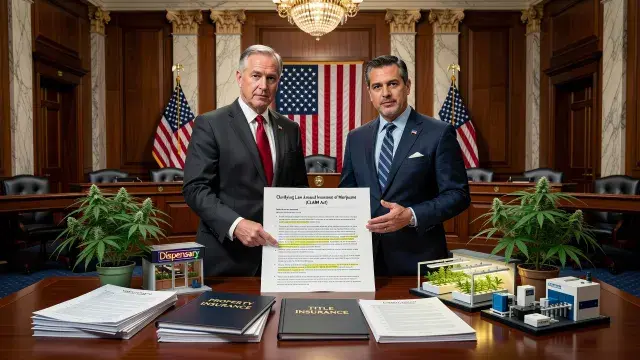
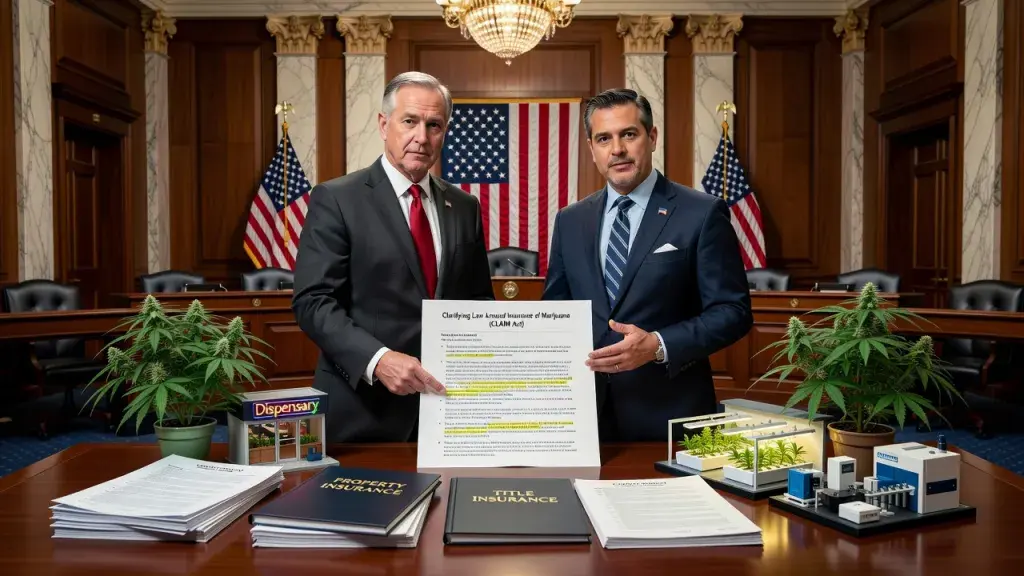
Two U.S. senators from opposite parties have reintroduced legislation that would give insurance companies, brokers and agents federal cover to work with state-licensed marijuana businesses without fear of regulatory penalty. Sens. Kevin Cramer (R-ND) and Ruben Gallego (D-AZ) filed the Clarifying Law Around Insurance of Marijuana (CLAIM) Act on Tuesday, marking the fourth consecutive Congress in which the measure has surfaced. The text is largely unchanged from prior versions, which tells you something about where the real obstacle sits - not in drafting the fix, but in getting it to a floor vote.
For operators, the insurance gap is one of the less-discussed but more corrosive byproducts of federal prohibition. Cannabis remains a Schedule I substance under the Controlled Substances Act, at least for now, and that status has long made carriers wary of writing property, casualty and title policies for dispensaries, cultivators and processors. Without adequate coverage, a single fire, theft, or product liability claim can wipe out a small operator's margin - and lenders often won't extend financing to a business that can't show proof of insurance in the first place. That reality complicates day-to-day operations in ways that ripple well beyond the budroom: a dispensary running a modern marijuana dispensary point of sale ohio system still needs the same liability and property protections any retailer would carry, yet finding a carrier willing to underwrite that risk has remained harder than it should be.
What the Bill Actually Changes
The CLAIM Act would bar federal agencies from penalizing insurers simply for covering state-legal marijuana businesses, and it would prevent insurers from dropping or restricting policies for cannabis companies or ancillary businesses based solely on the nature of the enterprise. It also extends liability protection to individual employees of insurance firms who service these accounts - a detail that matters more than it might sound, since compliance staff and underwriters have historically had to weigh personal exposure alongside institutional risk. The bill additionally directs the Government Accountability Office to study barriers facing minority-owned and women-owned cannabis businesses in licensing and financial services access, a nod to the social equity conversations that have shadowed state legalization programs for years.
Why Insurance Access Ties Back to Bank Financing
Here's the catch that often gets lost in the policy debate: insurance and banking access are linked. A dispensary or cultivator without adequate coverage frequently gets turned away by banks and credit unions, even those already willing to service cannabis accounts under existing guidance. That compounds the industry's reliance on cash-heavy operations, cashless ATM workarounds, and manual compliance logs instead of the integrated point-of-sale and payment infrastructure most retail sectors take for granted. Expanding insurance access wouldn't resolve the industry's banking problem outright, but it would remove one more excuse carriers and lenders use to sit on the sidelines.
Part of a Broader Federal Push
The CLAIM Act arrives alongside a related banking safe-harbor bill filed last month, and against the backdrop of an active DEA rescheduling proceeding that could move marijuana from Schedule I to Schedule III. Testimony in that administrative hearing concluded last week, with final briefs due by mid-August before a judge issues a recommendation. Separately, Senate Democrats led by John Fetterman have pushed full federal legalization, though that effort faces a much steeper path than incremental fixes like insurance and banking safe harbors. For operators watching from the compliance side, the practical lesson is the same regardless of which bill or rescheduling track eventually moves: risk management infrastructure - insurance, seed-to-sale tracking, accurate COAs, and clean point-of-sale records - remains the foundation any future federal framework will be built on top of.