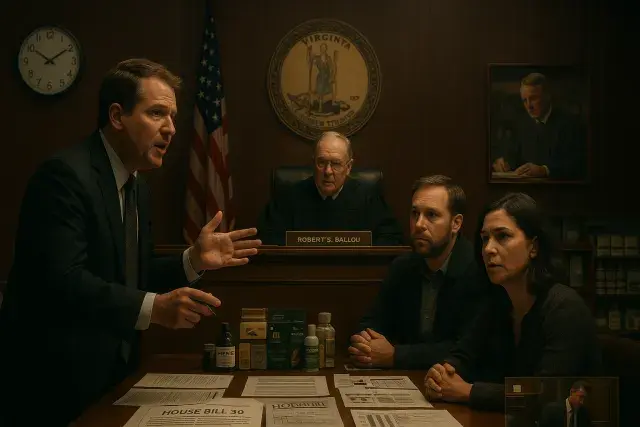
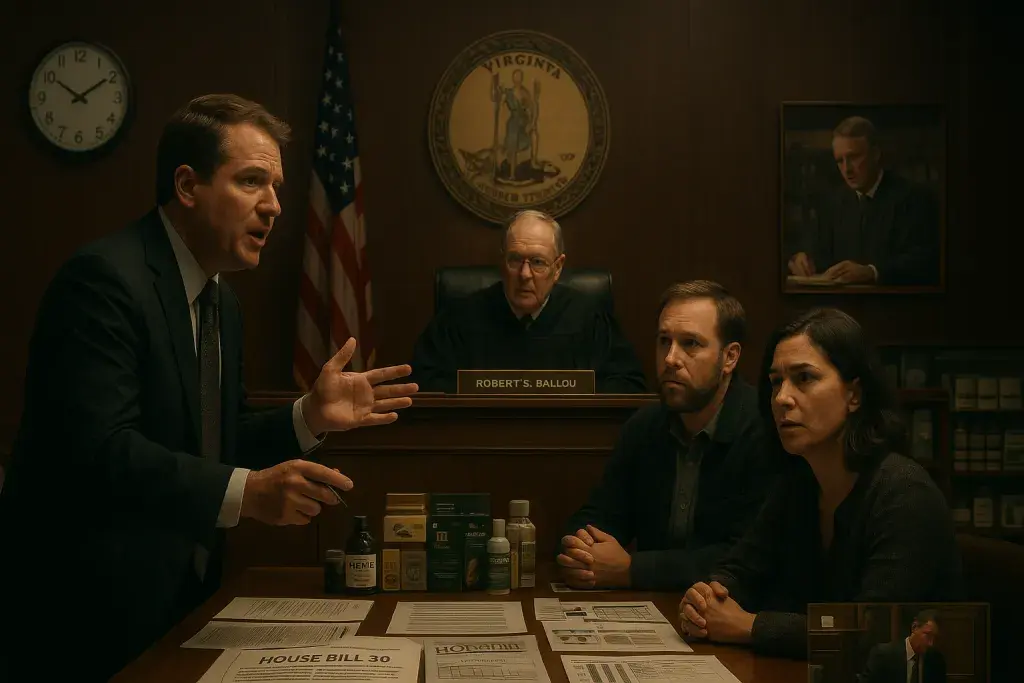
A federal judge spent nearly five hours Wednesday weighing whether to freeze Virginia's new hemp restrictions before they take effect Saturday, as store owners testified the rules could shut them down almost overnight. Seven hemp businesses are suing to stop enforcement of changes tucked into House Bill 30, which eliminate the state's longstanding 25-to-1 CBD-to-THC exception and cap most hemp products at two milligrams of total THC per package. U.S. District Judge Robert S. Ballou did not rule from the bench, but attorney Chap Petersen, who represents the plaintiffs, said he expects a decision within days.
The stakes here go well beyond a single court date. For retailers operating on thin margins, the difference between a temporary injunction and no relief at all is the difference between staying open and liquidating inventory that's suddenly unsellable. That operational whiplash is familiar to anyone who has watched a state regulator move faster than the supply chain can adjust - compliant packaging, batch testing, and point-of-sale configurations all take time to retool, and vendors serving these markets know it. Operators in other states have faced similar scrambles when THC thresholds shifted with little notice, which is one reason retail technology providers increasingly build state-specific rule sets directly into their systems; a dispensary running compliant cannabis POS in South Dakota, for instance, relies on the same kind of real-time regulatory mapping that Virginia's hemp shops now wish they'd had more lead time to implement. compliant cannabis POS in South Dakota
Petersen's argument rests partly on timing. Governor Glenn Youngkin didn't sign the budget bill until June 29, leaving businesses roughly six weeks before the Aug. 15 enforcement date - not much runway for an agricultural product. Hemp is planted in spring, harvested in fall, and processed into finished goods that have no other market once they're made. Unlike a piece of equipment that can be trucked across state lines, a harvested crop bound for Virginia shelves has nowhere else to go if the rules change mid-season.
What the Two-Milligram Limit Actually Changes
The new framework is part of Virginia's broader push to regulate intoxicating hemp-derived products as the state's adult-use marijuana market matures. Under the old exception, products with a 25-to-1 CBD-to-THC ratio were treated as compliant hemp regardless of total milligrams. That gave manufacturers room to formulate tinctures, edibles, and beverages with meaningful CBD content without tripping into cannabis territory. The new two-milligram-per-package ceiling removes that flexibility almost entirely, meaning a large share of existing inventory could fall outside the legal definition of hemp the moment the clock strikes midnight on Aug. 15.
For compliance officers and store managers, that's not a labeling tweak - it's a full inventory reclassification event. Products legal on a shelf one day could functionally become unlicensed cannabis products the next, with no transition period to sell through existing stock or reformulate. Cody Moorefield, who owns Simply Hemp in Collinsville, described the exact scenario keeping him up at night: product sitting on his shelf at 11:59 p.m. on Aug. 14, technically legal, then potentially exposing him to criminal liability minutes later. That kind of overnight status change is the sort of regulatory cliff-edge that keeps compliance attorneys busy and insurance underwriters nervous.
The Legal Path Forward - and Its Limits
Petersen has been careful to frame this hearing narrowly. The plaintiffs aren't asking Ballou to strike down the law outright; they want a temporary injunction that pauses enforcement while a broader constitutional challenge - including a potential takings claim - proceeds separately, possibly toward trial early next year. That's a deliberate strategy: win breathing room now, then use it to lobby the General Assembly for a legislative fix before litigating the harder constitutional questions.
The state, for its part, argued businesses had adequate notice, though it declined further comment after the hearing. Petersen also flagged a communication gap from Virginia's cannabis regulatory agency, saying operators received no policy guidance, no town halls, and no compliance roadmap ahead of a deadline that could reshape an industry the Cannabis Small Business Association has linked to over a billion dollars in annual retail sales, based on 2022 survey data. Whether that gap amounts to a legal defect or simply poor rollout execution is now largely up to Judge Ballou.