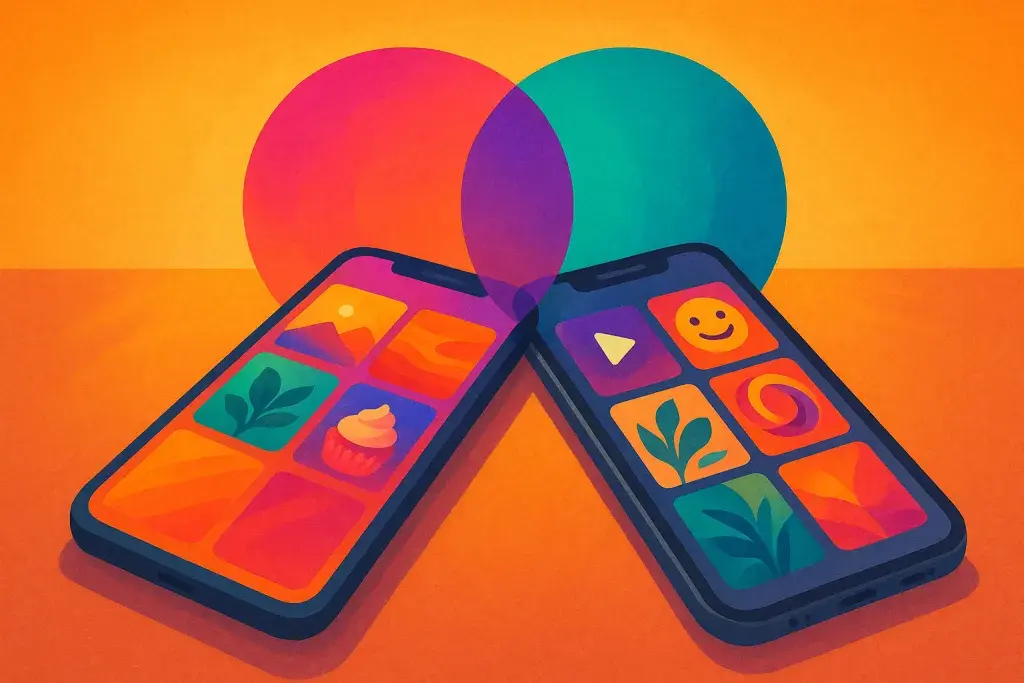
Spotify built an entire brand identity around Wrapped, but Instagram quietly tested something in 2024 that borrows the same emotional trigger: comparing your taste against someone else's. Instagram Blend takes the private, algorithm-driven "Explore for you" feed and turns it into a shared space where two accounts see content curated from both of their interests simultaneously. It sounds simple. In practice, it changes how people discover accounts, memes, and trends together, rather than in isolation.
Most users stumbled onto Blend through a notification or a friend's message, with no real explanation of what it does or how to control it. That confusion is exactly why a clear instagram blend guide matters right now. The feature touches privacy settings, content algorithms, and social dynamics all at once, and getting it wrong - sharing the wrong feed with the wrong person - creates awkward results fast. Some early adopters even started pairing Blend activity with an instagram follow boost to grow shared engagement faster, though that strategy carries its own risks worth understanding first.
This piece walks through setup, customization, troubleshooting, and the broader implications of Blend as a social feature. Whether you're testing it with a partner, a friend group, or out of pure curiosity, you'll leave with a working understanding of how it functions and how to use it well.
What Is Instagram Blend and Why It Matters
Instagram Blend is a shared Explore feed. Two users connect their accounts through Blend, and Instagram's recommendation system merges signals from both - likes, watch time, saves, shares - into a single feed both people can scroll. It's not a copy of one person's feed sent to another; it's a genuinely combined algorithmic output based on overlapping and divergent interests.
The Core Concept Behind Blend
Instagram's recommendation engine already tracks granular behavioral data for every account. Blend takes that existing infrastructure and applies it to two profiles at once, weighting content that satisfies both users' patterns. If one account watches cooking reels and the other follows travel content, the Blend feed leans toward videos that intersect both categories, or alternates between them.
Why Instagram Introduced This Feature
Social platforms compete for time spent in-app, and shared experiences increase that time. A feed built for two people gives users a reason to return together, comment to each other, and treat scrolling as a joint activity rather than a solitary one. It also generates richer data - Instagram learns not just what individuals like, but what pairs of users engage with jointly, which refines future recommendations for both parties.
How It Differs From Close Friends and Collab Posts
Close Friends controls who sees your Story. Collab posts let two accounts co-author a single post visible to both audiences. Blend does neither - it doesn't publish anything publicly and doesn't restrict story visibility. It's a private, mutual viewing experience confined to a feed only the two connected accounts can see.
- Close Friends: controls Story audience
- Collab: joint authorship of a single public post
- Blend: private, shared Explore-style feed between two accounts
Step-by-Step Instagram Blend Guide for Beginners
Setting up Blend requires both parties to opt in - one person cannot unilaterally pull another into a shared feed. This mutual consent structure is intentional and worth understanding before you send an invite.
Setting Up Blend With a Friend
To start, open a direct message thread with the person you want to Blend with. Instagram surfaces a Blend option within DMs, typically as a suggested action or through the conversation settings menu. Sending the invite generates a notification for the other account; they must accept before the shared feed activates.
Accepting or Declining a Blend Invite
When someone sends you a Blend request, you'll see a preview explaining what the feature does before you commit. Declining costs nothing - the requester isn't notified of a rejection in any pointed way, and no residual connection remains. Accepting immediately begins populating the shared feed based on both accounts' recent activity.
Navigating the Blend Feed Interface
Once active, the Blend feed appears as a distinct tab or section, separate from your personal Explore page. Content is marked or styled differently so you know you're viewing shared recommendations rather than your individual feed. You can react, comment, or send items from the Blend feed directly back into your DM thread with that person.
Instagram Blend Update: What's New and Changing
Features tied to algorithmic personalization rarely stay static, and Blend is no exception. Instagram has iterated on the original rollout based on user feedback and internal testing.
Recent Feature Additions
Early versions of Blend limited the feature to one-on-one pairings. Subsequent updates expanded this toward small group Blends, allowing three or more accounts to share a single merged feed - useful for friend groups who want a communal discovery space rather than a strictly paired one.
Changes to Privacy and Data Handling
Each instagram blend update has included adjustments to how much behavioral data feeds into the shared algorithm. Instagram has refined controls so users can pause their contribution to a Blend without fully disconnecting, giving people a temporary privacy buffer without ending the shared feed permanently.
Where to Track Future Updates
Instagram typically announces feature changes through its official blog, in-app notifications, and creator-facing communication channels. Following instagram blend news through these official sources is more reliable than relying on secondhand summaries, since screenshots and rumors circulate quickly but don't always reflect what actually shipped.
Instagram Blend Details Every User Should Know
Beyond the basic setup, several technical and behavioral nuances shape how well Blend works in practice.
How the Algorithm Weighs Shared Interests
Blend doesn't simply average two feeds. It identifies overlapping categories first, then fills remaining space with content each person individually engages with heavily, even if the other account shows no history with that category. This means a Blend feed skews toward genuine intersection rather than diluting both feeds equally.
Data Privacy Considerations
Activating Blend shares behavioral signals with another account's recommendation profile, even if it doesn't expose specific posts you've liked or saved. Understanding these instagram blend details matters if you're cautious about how much of your activity pattern becomes visible, even indirectly, to someone else.
Content Visibility Boundaries
Blend only pulls from public and recommendable content - it doesn't surface private accounts' posts unless both users already follow that account, and it respects existing block and restrict settings between third parties.
Common Problems and How to Solve Them
Like most newer social features, Blend has rough edges. Most issues fall into a few predictable categories.
Blend Feed Not Updating
If the shared feed feels stale, check whether both accounts have been active recently. Blend relies on fresh engagement signals; if one person hasn't opened the app in days, the algorithm has less new data to work with and defaults to older recommendations.
Notifications Not Appearing
Blend invites and activity notifications sometimes get buried under general app notification settings. Confirm that notifications for the specific DM thread aren't muted, since Blend alerts route through that same conversation.
Disconnecting or Pausing a Blend
Either participant can end a Blend at any time without needing the other person's approval. This immediately stops the shared feed from updating and removes it from both accounts' interfaces, though past shared interactions within the DM thread remain visible unless deleted separately.
Instagram Blend vs Other Instagram Features
Understanding where Blend fits relative to Instagram's broader feature set clarifies when it's the right tool versus when another feature serves better.
Blend vs Instagram Notes
Notes are short, public-facing status updates visible to followers or Close Friends. Blend is a consumption feature, not a publishing one - there's no equivalent broadcast element.
Blend vs Shared Story Highlights
Shared Highlights curate past Stories into a permanent collection. Blend is dynamic and forward-looking, constantly refreshing based on new activity rather than archiving anything.
When to Use Blend Instead of Direct Sharing
Sending individual posts back and forth in DMs works for occasional sharing. Blend makes more sense when two people consistently want to discover content together rather than curate it manually one post at a time.
Frequently Asked Questions
Can I Blend with more than one person at a time?
Yes, depending on your app version. Group Blend functionality allows three or more accounts to share a single merged feed, though this rolled out after the original one-on-one version and may not be available on every account yet.
Does Blend show my liked or saved posts to the other person?
No. Blend uses your behavioral data to influence which content appears in the shared feed, but it doesn't expose your specific likes, saves, or watch history as a visible list to the other account.
Can someone force me into a Blend without my permission?
No. Blend requires mutual acceptance. You'll receive an invite with a preview of what the feature does, and you can decline without any notification of rejection being sent back.
Does ending a Blend delete our shared feed history?
Ending a Blend stops the feed from updating and removes the shared tab from both accounts' interfaces, but it doesn't retroactively delete previous interactions made within the associated DM thread.
Is Blend available on all Instagram accounts?
Availability depends on app version, region, and account type. Business and creator accounts have seen staggered access compared to standard personal accounts during rollout phases.
Will using Blend affect my individual Explore feed?
Your personal Explore feed remains separate and unaffected by Blend activity. The shared feed operates as an additional, distinct space rather than replacing or altering your individual recommendations.